The Pentagon Papers
In 1967 Robert McNamara commissioned a classified internal history of the Vietnam War; in 1971 Daniel Ellsberg leaked it and the press published it. The Nixon administration won a court order to stop the presses, then lost six to three in New York Times Co. v. United States — the landmark ruling against prior restraint. This episode traces the study, the leak, and the seventeen-day fight that settled what the First Amendment says about printing the government's own secrets.
TRANSCRIPT
On the morning of Sunday, June thirteenth, nineteen seventy-one, the New York Times began publishing a secret history of the Vietnam War.
Two days later, the government of the United States went to federal court, and won, briefly, the right to stop the presses.
Fifteen days after that, the Supreme Court of the United States voted six to three to take that right away.
This is not the story of the war. The war is episode six's territory. This is the story of what happened when the government's own paperwork got out, seven thousand pages of it, and the government discovered, in court, what the First Amendment says.
Documented: the study. Documented: the leak. Documented: the fight. Claimed: that publishing it would wreck the nation's security. The government claimed it in court, and failed to prove it. That failure is the story.
First, the study. Documented.
In nineteen sixty-seven, the Secretary of Defense, Robert McNamara, commissioned an internal history of American involvement in Vietnam. Read that again: the man prosecuting the war commissioned the official history of the war, while prosecuting it.
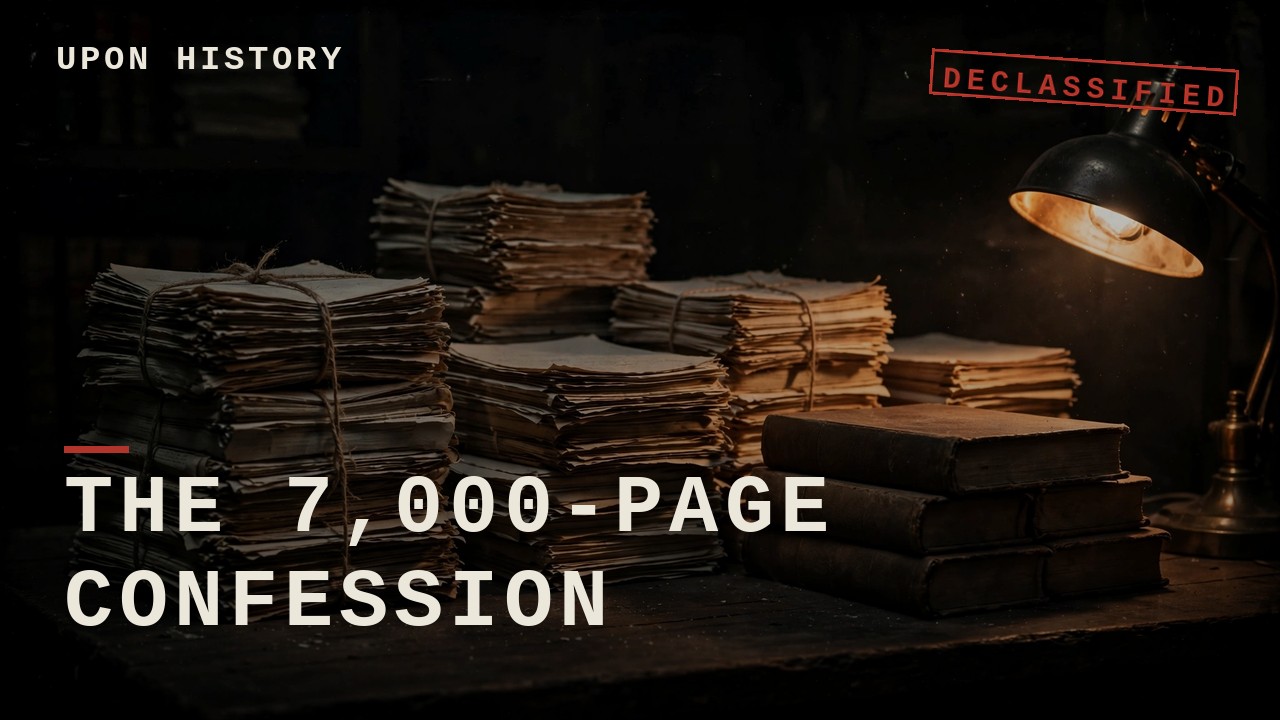
The work went to a task force under Leslie Gelb. The result was the Report of the Office of the Secretary of Defense Vietnam Task Force, also titled United States-Vietnam Relations, nineteen forty-five to nineteen sixty-seven. Forty-seven volumes. Approximately seven thousand pages. Classified Top Secret, Sensitive.
It was staff work: the same class of people who were running the war, writing down what had happened. It was completed in early nineteen sixty-nine and presented to McNamara's successor, Clark Clifford, that January. And then it was filed. Secret. To be read by almost no one.
For forty years, the complete study stayed that way, until June of two thousand eleven, when the National Archives and three presidential libraries put all of it online. Forty-eight boxes. About seven thousand pages. No redactions. Roughly a third of it, including the complete account of the peace negotiations, had never been public before.
But the public got its first taste, a small taste, forty years earlier. And that is where the leak comes in.
Daniel Ellsberg was a military analyst at the Rand Corporation who had worked on the study. With his colleague Anthony Russo, he spent months secretly copying it. The National Archives' own account of the leak is dry: the copy Ellsberg and Russo made, not the pristine study Leslie Gelb's team had produced, but a copy, made at night and passed hand to hand, was the source document of every unauthorized release that followed.
Ellsberg first tried to get senators to hold hearings on the material. None would. So he took it to the press.
On June thirteenth, nineteen seventy-one, the New York Times began publishing. The stories drew on only a small portion of the seven thousand pages, no newsroom reads, checks, and prints forty-seven volumes overnight, but it was enough.
Five days later, on June eighteenth, the Washington Post began publishing its own installments.
And the administration of President Nixon, the administration that inherited the study, not the one that commissioned it, decided this was where it would make its stand.
On June fifteenth, nineteen seventy-one, the government won a temporary restraining order against the Times from a federal court in New York, no further publication until a judge could rule on the merits.
Stop and register that. The government of the United States had asked a federal court to do something no federal court had done in the one hundred eighty-two years since the republic was founded: halt the publication of current news of vital importance to the people of the country. Those are not this channel's words. Those are Justice Black's, from the opinion this episode is about, and they were verified verbatim.
Then the Post. The government went after it too, and won a restraint from the district court in Washington, only for the appeals court there to refuse to stop publication. Two circuits, two directions.
So the cases were consolidated and rushed to the Supreme Court: New York Times Company against the United States, and the United States against the Washington Post Company. Certiorari granted. Oral argument heard on June twenty-sixth. Decision on June thirtieth.
Seventeen days, first story to final judgment, one of the fastest major First Amendment cases in the Court's history. It had to be. The newspapers were under court order not to publish.
June thirtieth, nineteen seventy-one. Six to three. Per curiam, for the Court.
The opinion is barely two pages. It names the study the government wanted suppressed, the Court's own title for it: History of U S Decision-Making Process on Viet Nam Policy. And then it reaches for the rule:
Quote: Any system of prior restraints of expression comes to this Court bearing a heavy presumption against its constitutional validity.
The burden, in other words, was entirely on the government. And it did not carry it. Not in the district courts, and not at the top.
Then the concurrences, and here is a documented oddity: the decision has nine separate opinions. The per curiam is brief, and then every justice writes. Among them, two passages that have outlived the case.
Justice Black: The press was to serve the governed, not the governors. The Government's power to censor the press was abolished so that the press would remain forever free to censure the Government.
And Justice Stewart, no First Amendment absolutist, whose concurrence reads like a man granting the government's premise and ruling against it anyway:
I cannot say that disclosure of any of them will surely result in direct, immediate, and irreparable damage to our Nation or its people.
That sentence is the standard. Stewart was saying: even I, who believe the press can be restrained in extreme cases, do not see the extreme case here.
And what did the government claim? That further publication would cause irreparable injury to the national defense. In the Supreme Court, the government's asserted standard was grave and irreparable danger to the public interest. That is claimed, its lawyers' words, argued in court, as their case required. But both district courts found the government had not met its burden, the per curiam says so in plain text, and the Supreme Court agreed.
So the claimed harm has a label and a verdict. Claimed. And not shown.
Now the labels, applied with care.
The study: documented. Commissioned in nineteen sixty-seven by Robert McNamara. Forty-seven volumes, about seven thousand pages, the Report of the Office of the Secretary of Defense Vietnam Task Force, also titled United States-Vietnam Relations, nineteen forty-five to nineteen sixty-seven. Classified Top Secret, Sensitive. Completed in early nineteen sixty-nine. Fully released by the National Archives in June two thousand eleven: forty-eight boxes, no redactions, about a third of it new to the public.
The leak: documented. Copied by Daniel Ellsberg and Anthony Russo, the National Archives says their copy was the source document of every unauthorized release. First published by the New York Times on June thirteenth, nineteen seventy-one. The Washington Post began on June eighteenth.
The fight: documented. A temporary restraining order against the Times on June fifteenth, nineteen seventy-one, the first such restraint in the republic's history, in Justice Black's verified words. The Post restrained, then freed by its appeals court. The cases consolidated. Oral argument June twenty-sixth. Decision June thirtieth.
The decision: documented. Six to three. Per curiam. New York Times Company against the United States, four oh three, U S, seven thirteen, decided nineteen seventy-one. The heavy presumption against prior restraint. Black on the governed, not the governors. Stewart's standard: no showing of direct, immediate, and irreparable damage. Nine separate opinions.
The harm: claimed. Grave and irreparable danger, the government's asserted standard, its lawyers' words, made in court. The claim failed on the merits: the government could not carry the heavy burden, in the district courts or above. Asserted, argued, and not shown.
What the government never named in open court: unverified. The specific pages it feared most were argued over in sealed proceedings, the public record does not say which disclosures the executive branch actually dreaded. Ellsberg's private calculations, beyond his public statements: unverified. Whether the papers changed the war's course, or merely confirmed what the public already suspected: unverified. The study is public now. The fear that surrounded it was never demonstrated, and more than fifty years later, it still hasn't been.
The deadpan truth of the Pentagon Papers is a timeline.
Nineteen sixty-seven: the government writes a seven-thousand-page history of its own war, stamps it Top Secret, Sensitive, and files it. Nineteen seventy-one: two analysts copy it, two newspapers print pieces of it, and the government asks the courts to do what no court had done in one hundred eighty-two years. Seventeen days later, six justices say no.
Documented: the study, the leak, the fight, the six-to-three decision. Claimed: grave and irreparable harm, asserted in court, never shown. Unverified: what the government was actually afraid of.
Ellsberg was prosecuted for the leak. The case was dismissed in nineteen seventy-three, after the government's misconduct against him came to light. He died on June sixteenth, two thousand twenty-three, at ninety-two, a free man, and the most famous leaker in American history.
So: the government wrote a seven-thousand-page confession, stamped it secret, and then discovered the First Amendment. The confession is a public record now, anyone can read it. The fight lasted seventeen days. The government lost. And the press kept the right to print the government's own paperwork, which is, in the end, what the governed were supposed to get all along.
SOURCES
The genuine documents shown or cited in this episode. (4 sources)
- National Archives — the complete Pentagon Papers release page (June 2011)
- New York Times Co. v. United States, 403 U.S. 713 (1971) — full opinion text via Cornell Legal Information Institute
- Aerial photo of the Pentagon — U.S. Air Force via DVIDS
- U.S. Supreme Court building photo — via supremecourt.gov
