Project Azorian
In 1968 the Soviet submarine K-129 sank with three nuclear-armed missiles aboard; six years later the CIA sent a ship — fronted by Howard Hughes — to lift her from 16,500 feet down. The operation cost a reported $500 million, and what it actually recovered remains classified. Its most durable legacy is a sentence the government still says to this day.
TRANSCRIPT
March first, nineteen sixty-eight. A Soviet submarine, the K-one-twenty-nine, sails from the naval base at Petropavlovsk on the Kamchatka Peninsula, bound for a patrol station northeast of Hawaii. She carries three nuclear-armed ballistic missiles.
Two weeks later, she is gone.
Somewhere around mid-March, the K-one-twenty-nine suffered a catastrophic accident and sank one thousand five hundred sixty miles northwest of Hawaii, settling sixteen thousand five hundred feet down. Her entire crew was lost.
The Soviets never found her. The Americans knew exactly where she was.
Six years later, the Central Intelligence Agency sent a ship to pick her up.
That was the plan. What actually came up, and what it cost, and what it was worth, is where the documents stop talking.
This is the story of the most expensive deep-sea salvage operation in history. It was fronted by a celebrity, and its most durable legacy is not what it recovered. It is a sentence the government still says to this day.
First, the operation itself. Documented.
In the fall of nineteen eighty-five, the C I A's in-house journal, Studies in Intelligence, published a fifty-page article titled Project Azorian: The Story of the Hughes Glomar Explorer. It was written by a participant, and it was classified. Twenty-five years later, on February twelfth, twenty ten, the C I A declassified it, after a Freedom of Information Act request filed by researcher Matthew Aid on December twelfth, two thousand seven.
This article is the documented spine of everything that follows.
Here is what it says. On July first, nineteen sixty-nine, the C I A created a Special Projects Staff to run the program. Its chief was John Parangosky; his deputy, running day-to-day operations, was Ernest Zellmer, a World War Two submarine officer. President Richard Nixon personally approved the task force that August.
The operation's code name was Azorian. The ultra-restricted security compartment around it was called Jennifer. For decades afterward, books got it backward and called the operation Jennifer. The C I A's own history corrects the record: Azorian was the mission. Jennifer was the lock on the door.
By October of nineteen seventy, the engineers had a plan: slip a sling of pipe-string around the one-thousand-seven-hundred-fifty-ton submarine, five miles down, and winch her slowly to the surface with a purpose-built ship.
The agency's own early estimate of success: ten percent.
By August of nineteen seventy-one, cost overruns had nearly killed the program. On October fourth, nineteen seventy-one, the C I A was authorized to proceed, saved, the article says, by the potential intelligence payoff. The keel was laid the next month, at the Sun Shipbuilders yard in Chester, Pennsylvania.
Then politics. In July of nineteen seventy-two, the oversight committee asked the Forty Committee to review the program, worried that warming relations with Moscow might make the mission politically impossible. The Pentagon's senior leadership recommended termination: costs rising, political risks enormous, intelligence value doubtful.
On December eleventh, nineteen seventy-two, President Nixon ordered it continued anyway.
On June seventh, nineteen seventy-four, Nixon personally approved the mission, with one condition: the ship would not begin work until after his return from a summit in Moscow. The Glomar Explorer arrived at the site on July fourth, nineteen seventy-four, the day after Nixon left Moscow.
The lift began on August first. Eight days later, on August eighth, the K-one-twenty-nine was secured aboard, and the ship sailed for Hawaii.
For nearly two weeks, two Soviet naval vessels watched the whole thing. On July eighteenth, the C I A mission director ordered crates stacked on the helicopter deck to block a possible Soviet helicopter landing. The crew was told to be prepared to destroy sensitive material if the Soviets tried to board. The team assigned to defend the control room was alerted, but guns were not issued.
Now the cover story, and this is the part that outlived the ship.
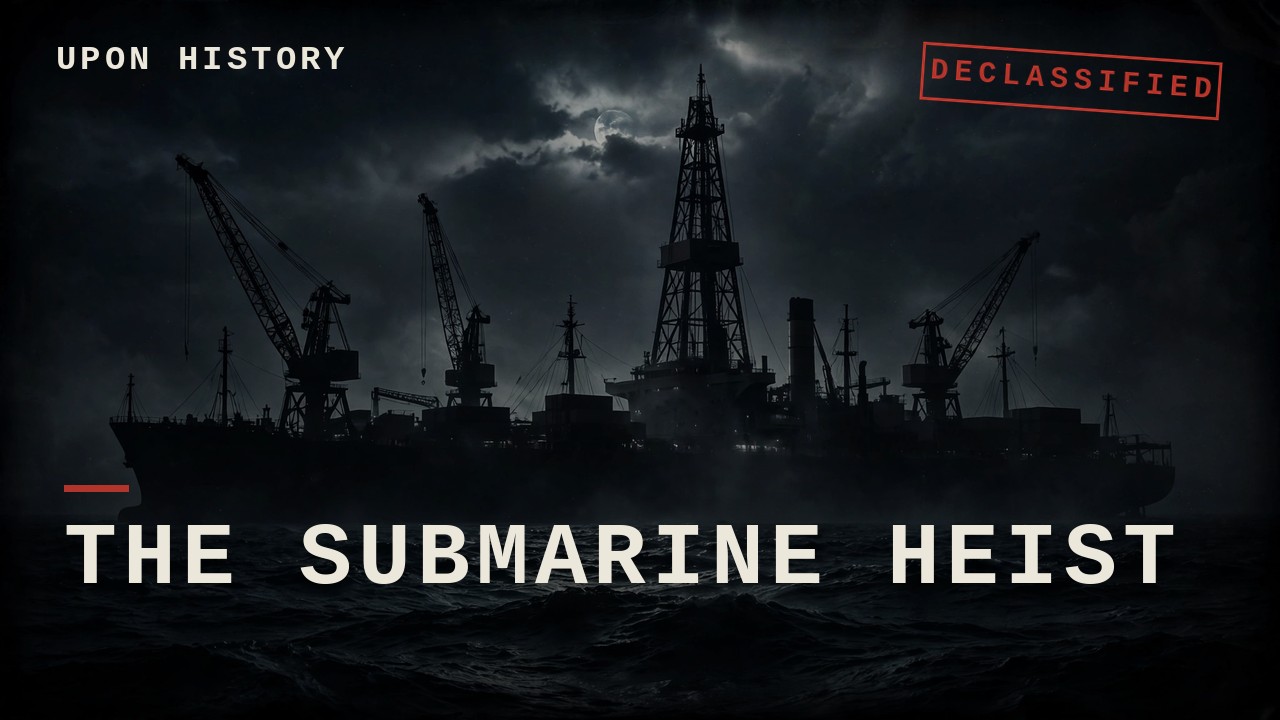
To operate a vessel like the Glomar Explorer in the open, the C I A needed a story: a commercial venture to harvest manganese nodules from the ocean floor, fronted by one of the most famous men in America, Howard Hughes. The ship even carried his name.
The cover worked, for a while: it explained the strange ship, the strange equipment, the strange location.
But a cover story is only useful until it isn't. When reporters started asking questions, the C I A fell back on something stranger than fiction: it refused to confirm or deny the operation had ever existed.
In nineteen seventy-five, journalist Harriet Ann Phillippi filed a Freedom of Information Act request for the agency's records of its efforts to discourage press coverage. The C I A answered that it could neither confirm nor deny its connection to the ship. Phillippi sued. In nineteen seventy-six, the federal appeals court upheld the agency's position.
Since then, the phrase has become a legal doctrine: the Glomar response, neither confirm nor deny, now standard practice in Freedom of Information litigation, invoked far beyond the C I A, far beyond submarines.
The cover story failed. It became case law instead.
Now the leak. Documented.
In February of nineteen seventy-five, the Los Angeles Times was about to publish. On February seventh, Director of Central Intelligence William Colby called the chief executive of the company that owned the paper and asked him to kill the story. It ran the next day anyway.
The declassified memoranda of conversation from nineteen seventy-five record the scramble. On the morning of March nineteenth, the same day Seymour Hersh's exposé appeared in the New York Times, President Ford met with his top advisers.
At that meeting, the Secretary of Defense recommended acknowledging the bare facts, denying the story was implausible. Director Colby disagreed. He invoked nineteen sixty, when President Eisenhower's admission of the downed U-two deepened a crisis with Moscow. Confirming the story, Colby argued, would put the Soviets under pressure to respond. His advice prevailed.
Hersh's article, on March nineteenth, reported that the mission had, in the judgment of senior Navy officials, failed to recover the submarine's nuclear-armed ballistic missiles. The administration had asked Hersh to hold the story. He held it, for a time. Then he published.
Now the question at the center of all of it: what did the operation actually get?
Documented: on August eighth, nineteen seventy-four, the Glomar Explorer secured a portion of the K-one-twenty-nine in its hold and sailed for Hawaii. A portion. The declassified article confirms the recovery happened. And then, the redactions begin.
The C I A withheld three things entirely: the massive cost overruns, how much of the submarine was recovered, and what intelligence was derived from it. The pages that should answer the question of what the operation accomplished are blacked out.
What fills the gap is claimed, reported, not documented.
Hersh reported in nineteen seventy-five that the mission failed to bring up any of the submarine's nuclear-armed ballistic missiles. In nineteen ninety-eight, the book Blind Man's Bluff reported that only a thirty-eight-foot forward section was recovered, the torpedo compartment, and that roughly ninety percent of the vessel broke free during the lift and fell back to the ocean floor.
And the cost? Subsequent reports estimate as much as five hundred million dollars, in nineteen seventy-four dollars. That figure comes from reporting, not the declassified file. The file's cost pages are redacted. Label it honestly: claimed.
One thing the surviving text does admit: the recovery crew had to deal with plutonium contamination once the section was raised, caused by the detonation of the high-explosive components of one or more of the submarine's nuclear torpedoes. Something with a nuclear warhead came up in that hold. Exactly what, the file does not say.
And the crew. In the recovered section, the Americans found the bodies of six Soviet seamen, given a formal burial at sea, military honors, the Soviet anthem, the service videotaped. In nineteen ninety-two, the United States gave that tape to Russia: a quiet gesture, eighteen years after the fact.
Now the labels, applied with care.
The operation and the cover: documented. In August of nineteen seventy-four, the Glomar Explorer raised a portion of the K-one-twenty-nine from sixteen thousand five hundred feet, under the eyes of two Soviet surveillance ships, behind a deep-sea mining cover fronted by Howard Hughes. And when the cover broke down, the neither confirm nor deny answer became a permanent legal doctrine: the Glomar response.
The exposure and the burial: documented. The Los Angeles Times story of February nineteen seventy-five, the March nineteenth Hersh exposé, the White House memoranda recording the administration's response, and six Soviet seamen, buried at sea with honors; the service videotaped; the tape given to Russia in nineteen ninety-two.
The article's own words, from the days the Soviets were watching: the crew was told to be prepared to order the emergency destruction of sensitive material if the Soviets attempted to board the ship. The team assigned to defend the control room long enough to destroy the material was alerted, but guns were not issued.
Note what is proven, and what is not. Proven: the program existed, the ship sailed, the lift happened. Not proven: what the portion contained, or what the agency learned from it.
The mission was a failure: claimed. Senior Navy officials told Hersh so in nineteen seventy-five. The mission recovered two nuclear torpedoes and valuable equipment: claimed. A Russian expert panel concluded in nineteen ninety-three that the C I A recovered at least two nuclear-armed torpedoes, consistent with the plutonium contamination in the C I A's own article. But the article's intelligence-yield pages are redacted, and this channel does not upgrade consistency to confirmation.
The five-hundred-million-dollar price tag: claimed. Widely reported, never documented in the declassified file.
The full true cost: unverified. The real number sits behind the redactions.
What the Soviets actually knew: unverified. They watched the ship for two weeks. They surely suspected something. Whether Moscow ever understood what was lifted from the ocean floor, no declassified document says.
Documented: a sunken Soviet submarine, March nineteen sixty-eight. A six-year program, a purpose-built ship, a lift completed on August eighth, nineteen seventy-four. A cover story fronted by Howard Hughes. A press exposé in March nineteen seventy-five. A burial at sea with honors. And a fifty-page history, declassified in twenty ten, with its most important pages blacked out.
Claimed: a five-hundred-million-dollar price tag. A thirty-eight-foot fragment of a three-hundred-foot submarine. Two nuclear torpedoes. Success or failure, depending on who is telling the story.
Unverified: what it all cost, what it all yielded, and what the other side knew.
The deadpan truth of Project Azorian is not the claw, or the ship, or the redacted fortune. It is that the operation's two most durable products were both accidents: the salvage broke apart on the way up, and the file breaks apart on the way down. And the cover story, which failed to cover anything, is now the sentence the government uses whenever it wants to say nothing at all: we can neither confirm nor deny.
The most expensive salvage operation in history left its mark not on the ocean floor, but in the law books.
SOURCES
The genuine documents shown or cited in this episode. (3 sources)
- National Security Archive release page for “Project Azorian: The CIA’s Declassified History of the Glomar Explorer” (EBB No. 305, 2010)
- CIA, “Project Azorian: The Story of the Hughes Glomar Explorer,” Studies in Intelligence, Fall 1985 (declassified 2010)
- White House memorandum of conversation, March 19, 1975 — President Ford and advisers on the Seymour Hersh exposé